
There is a lot of noise around OpenAI’s new Jalapeño chip right now. Some of the headlines already have OpenAI ‘beating NVIDIA’ or even winning the AI race. I wouldn’t go that far. NVIDIA remains enormously important to the entire AI industry, including OpenAI itself.
But after looking closely at what OpenAI has actually built, I think Jalapeño matters for a much bigger reason.
For the past few years, we have watched the AI race mainly through model releases: GPT versus Gemini versus Claude, with Meta, xAI, DeepSeek and others fighting for position. I increasingly think that is only one part of the competition. The bigger race is becoming the infrastructure required to produce useful intelligence at enormous scale.
And that is where OpenAI’s strategy is getting particularly interesting.
Jalapeño is bigger than a chip benchmark
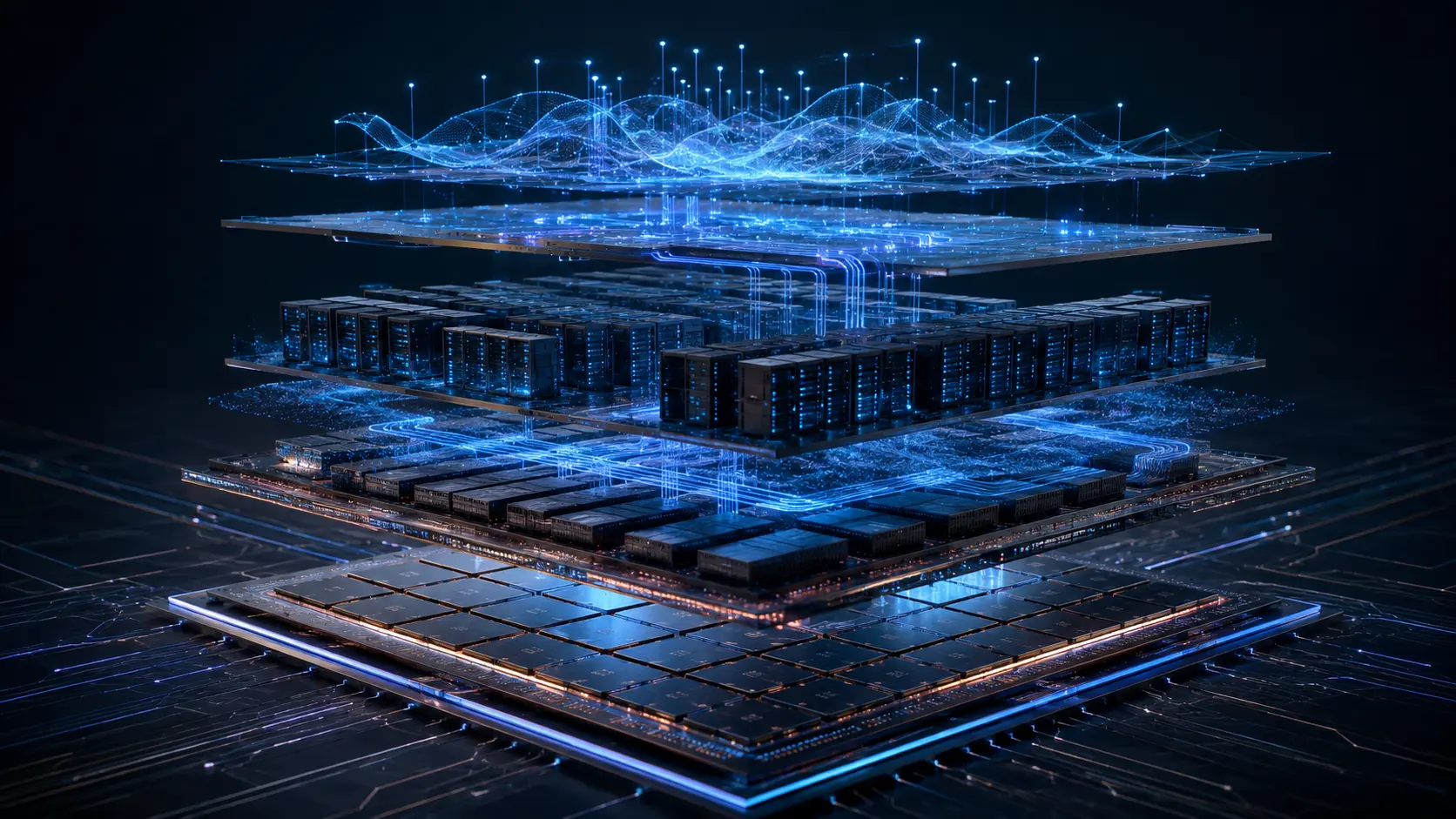
Jalapeño is OpenAI’s first custom inference processor, developed with Broadcom. OpenAI’s first published results report 1.5 to 1.9 times more AI work per watt at peak throughput and 1.7 to 3.6 times lower end-to-end latency than the NVIDIA Blackwell systems used in its comparisons across GPT-OSS 120B, DeepSeek R1 670B and Kimi K2.5 1T. SemiAnalysis also observed benchmark runs in OpenAI’s lab and described the first-generation result as unusually competitive, while noting that broader production and next-generation comparisons still matter.
Those numbers are impressive, especially for first-generation silicon. But the benchmark is not the part I find most important. The strategic significance is that OpenAI is gaining control over another layer of its stack.
OpenAI can increasingly coordinate models, serving software, inference architecture, memory, networking, chips, data-center infrastructure and the products used by hundreds of millions of people. When the company building the model also understands exactly how that model behaves in production, it can design infrastructure around real workloads rather than around a generic specification.
Google understood this logic years ago with TPUs. Amazon has Trainium. NVIDIA is moving beyond selling individual GPUs toward complete AI-factory systems. OpenAI is now pursuing its own version of vertical integration while continuing to use infrastructure from NVIDIA and other partners. That is not a contradiction. It is optionality.
The economics of intelligence are becoming the battlefield
Training frontier models gets most of the attention, but inference is where AI meets the economy. Every ChatGPT response, coding task, reasoning chain and autonomous agent consumes compute.
This becomes much more important as AI shifts from answering questions to performing sustained work. An agent researching a market, writing software, qualifying leads, processing documents or coordinating a workflow may make dozens or hundreds of model calls before completing a task. Multiply that by millions of agents operating continuously and the economics become enormous.

That is why performance per watt, latency and cost per completed task matter. If OpenAI can serve more useful intelligence from the same power and infrastructure, it can potentially make advanced AI faster and cheaper while supporting much larger volumes of autonomous work.
What this could mean for GPT-6 and the road to AGI
Jalapeño does not tell us what GPT-6 will be capable of, and it certainly does not prove that AGI is around the corner. We should be careful about turning engineering progress into predictions we cannot substantiate.
What it does show is that OpenAI is thinking beyond the model itself.
The road toward increasingly general and autonomous AI is becoming a systems problem. Models need compute, and compute depends on chips, memory, networking, data centers and power. Agents need tools, reliable runtimes, permissions, security, observability and governance. Once AI starts acting rather than merely answering, integration with the real world becomes just as important as model intelligence.
That is why my view of OpenAI has changed. I no longer think it makes sense to describe it simply as the company behind ChatGPT. It is increasingly assembling pieces of a much broader intelligence platform.
OpenAI and Broadcom have already announced plans around 10 gigawatts of OpenAI-designed accelerators, while OpenAI is simultaneously planning enormous NVIDIA deployments. This tells me the strategy is not to replace every supplier. It is to control enough of the stack to optimize each workload and avoid being dependent on a single path.
If I had to place a bet today
If you forced me to choose one company today that I believe is most likely to remain at the front of consumer AI and among the leaders in the race toward AGI, I would still choose OpenAI.
Not because ChatGPT happens to be the best-known AI product. My reasoning is the combination: frontier research, enormous distribution, developer adoption, enterprise usage, agents, infrastructure partnerships and now a credible first-party silicon roadmap.
That does not mean the race is over. Google may have the strongest structural counterargument because it already controls models, custom silicon, cloud infrastructure, Search, YouTube, Android and Workspace. Anthropic is formidable in enterprise AI and coding. NVIDIA remains fundamental infrastructure. Meta, xAI, DeepSeek and others can change the competitive landscape quickly.
So I would bet on OpenAI, but I would not build a company that depends on OpenAI winning.
What this means for companies—and for Shofield AI
This is exactly why we are building Shofield AI to operate above the model and infrastructure wars.
Shofield AI helps companies implement cutting-edge AI and turn it into autonomous workflows that perform real business work. Our job is not to force every company onto one model. It is to continuously use the strongest technology available for the workload, while integrating it into secure, measurable business processes.
That can mean autonomous sales workflows that research prospects, qualify opportunities and execute follow-up; customer-service workflows that understand requests and resolve routine cases; document and case operations that classify, extract, validate and route information; coding agents that build, test and maintain software; or AI operations that coordinate multiple specialized agents across a company.
The technology underneath those workflows will keep changing. Today the best option may be an OpenAI model. Another workload may be better served by Gemini, Claude, an open model or a sovereign model running inside a customer’s own environment. The infrastructure might involve NVIDIA, AMD, a specialized inference platform or, eventually, OpenAI’s own silicon indirectly through its services.
The principle is simple: companies should not have to rebuild their operations every time the AI leaderboard changes. They need an implementation layer capable of adopting the frontier as it moves.
Shofield AI brings Sales AI Manager, AI Content Manager and CRM AI Manager together in one autonomous AI workforce platform. Approved business context, feedback and supported outcome evaluations help the work improve within your configured permissions.
My prediction
I believe we are moving from the LLM race into the intelligence-stack race.
Model capability will remain crucial, but the long-term winners will also need to deliver that intelligence with extraordinary speed, reliability and economic efficiency. They will need the infrastructure to support millions of agents performing useful work continuously.
Jalapeño is interesting because it shows OpenAI understands that transition.
If its first custom inference chip is already this competitive, I am paying close attention to what comes next. Combine better infrastructure with future generations of GPT, increasingly autonomous agents and ChatGPT’s distribution, and OpenAI has the ingredients for a formidable compounding advantage.
That does not guarantee OpenAI reaches AGI first. Nobody can responsibly guarantee that.
But if you ask me where I would place the largest bet today, it is still OpenAI.
The model race got us here. I think the ability to turn compute into useful intelligence—faster, cheaper and at enormous scale—will help determine who leads the next phase.