
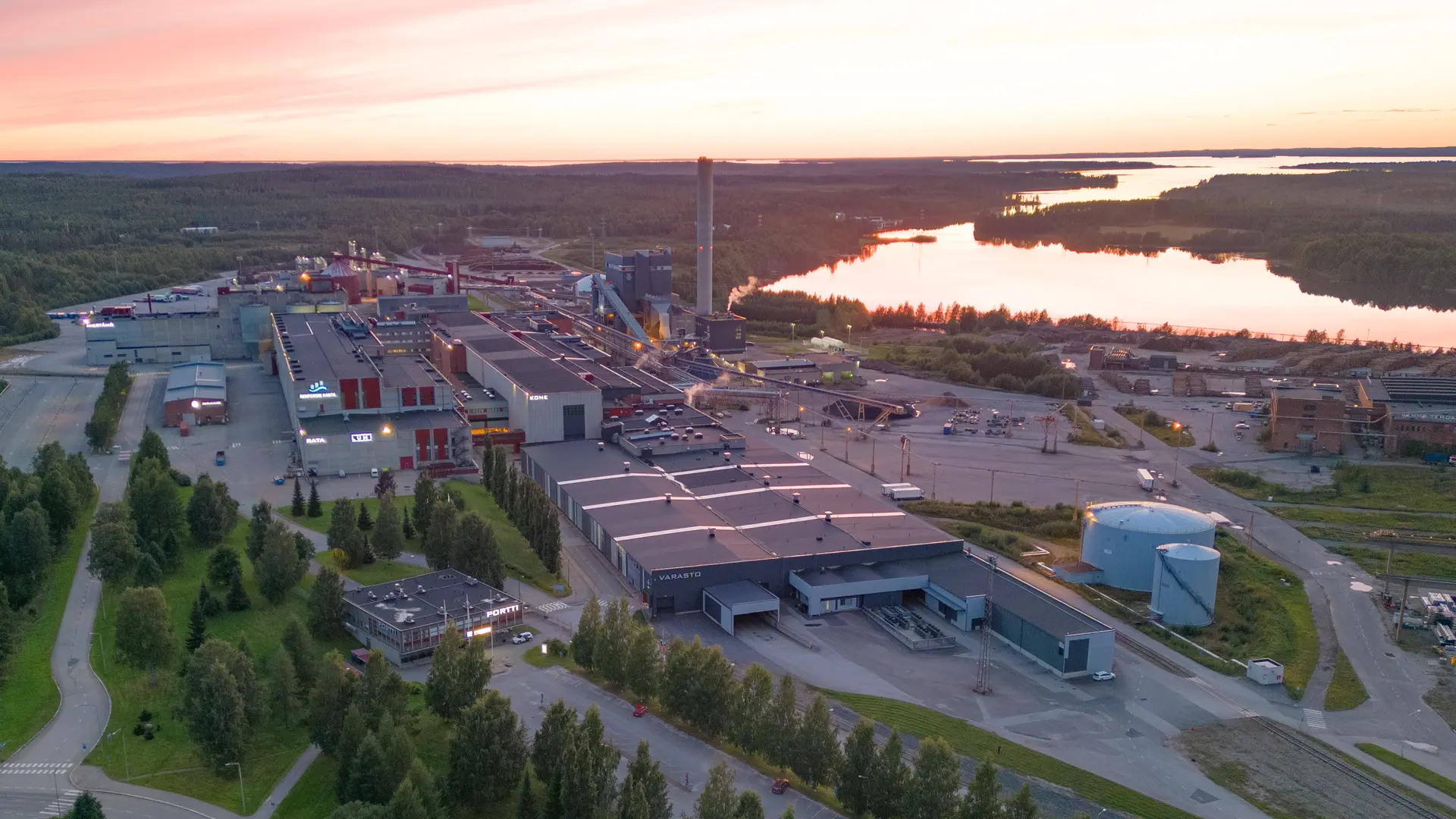
The most important AI announcement this week was not another model launch. Europe signed a €387.8 million contract for LUMI-AI, a new AI-optimised supercomputer in Kajaani, Finland. The official ambition is substantial: ten times the AI capacity of the current LUMI system, next-generation AMD accelerators, and availability for European startups, smaller companies, researchers and public institutions in 2027.
The number that matters most to me, however, is not ten times. It is zero: the amount of spare capacity available to every qualified organisation today. EuroHPC’s infrastructure head told Reuters that applications are already being rejected because demand exceeds supply. That turns compute scarcity from an abstract industry forecast into a current operating constraint.
My conclusion is broader than this European project. AI strategy is becoming physical. Models, agents and autonomous workflows ultimately depend on chips, power, cooling, networking, storage, skilled operators and permission to process particular data in a particular jurisdiction. Leaders who treat those layers as an invisible utility are building business plans on capacity they may not control.
What Europe actually committed
EuroHPC published the procurement at 14:00 Central European Summer Time on 31 August. LUMI-AI will be hosted by CSC in Finland through a consortium involving Finland, Czechia, Denmark, Estonia, Norway and Poland. The €387.8 million budget covers acquisition, delivery, installation and maintenance; EuroHPC will fund half through the Digital Europe Programme and the consortium will fund the other half.
The system is expected to combine AMD Instinct MI430X GPUs with sixth-generation AMD EPYC processors. It will support large, dynamic and confidential datasets as well as simulation-heavy scientific work. EuroHPC says the wider network now includes 19 AI Factories and 13 antennas, with LUMI-AI becoming the sixth next-generation AI Factory procurement.
This is not a server purchase dressed up as industrial policy. It is a shared access model: public capital, multi-country governance, specialist infrastructure and allocation rules designed to give European organisations capacity they could not economically secure alone. The system is not available yet, and access will not be automatic. That distinction should remain visible in every board discussion.
Compute is not only a problem for model builders
Most enterprises will never train a frontier foundation model, and they should not pretend otherwise. But they will still consume large amounts of compute through inference, retrieval, evaluation, simulation, video generation, cybersecurity analysis and continuously running AI employees. An autonomous workflow can call several models and tools for one customer outcome. Small unit costs become material when the workflow runs all day across thousands of cases.
Capacity also affects resilience. A company may have a contract with a model provider yet still encounter regional limits, accelerator shortages, rate restrictions or an unsuitable data boundary. A fallback model is not a fallback if it depends on the same constrained infrastructure, cannot run in the required jurisdiction or becomes uneconomic at production volume.
This is why I think every serious AI business case now needs an infrastructure line. Not just ‘cloud cost,’ but expected tokens, video seconds, retrieval load, concurrency, latency, storage, data transfer, evaluation overhead and the cost of the approved alternative path. Revenue projections without capacity and margin assumptions are incomplete projections.

Sovereignty is an operating property—not a flag on a data centre
European infrastructure is strategically useful, but geography alone does not create sovereignty. The announced system still relies on an international technology stack. That is normal. Sovereignty means knowing where the dependencies are and retaining meaningful authority over data, identity, encryption, model choice, operations and exit.
A regulated organisation should be able to show which workloads may use shared public infrastructure, which require a private environment, which can call a frontier API, and which must remain inside a sovereign or air-gapped boundary. It should also know who allocates capacity, who can administer the system, which laws apply, how logs are retained and what happens if the preferred route is unavailable.
The right architecture may be deliberately mixed: public AI Factory capacity for research and evaluation, commercial cloud for elastic production, private compute for sensitive operations, and external frontier models for tasks where they produce a measurable advantage. The control plane must keep identity, policy, evidence and human authority consistent across those paths.
The regional implications are different—but connected
For European buyers, LUMI-AI expands a strategically important route to regional capacity and research support. It does not remove the need to qualify access, portability, compliance and production economics. For US enterprises, the lesson is concentration: abundant private investment does not eliminate dependency on a limited set of accelerator, cloud and energy suppliers.
For the UAE, infrastructure investment can support the country’s role as a regional AI hub, but buyers still need workload-level evidence for sovereignty and commercial continuity. Across Africa, limited regional capacity, latency, foreign-currency exposure and connectivity can make efficient models, regional partnerships and workload placement more important than chasing the largest model.
These are not four separate AI races. They are one supply network with different legal, economic and operational constraints. Organisations operating across regions need a deployment policy that can make those differences explicit rather than forcing every workload through one provider and one architecture.
What I would require in the next 90 days
I would start with the three AI workflows most likely to affect revenue, service continuity or regulatory exposure. For each one, map the models, regions, compute provider, data stores, peak demand, cost per completed outcome and minimum acceptable performance. Then test what happens when the primary route is unavailable or twice as expensive.
- Create a compute dependency register covering providers, regions, accelerators, quotas, energy and network assumptions.
- Separate experimentation capacity from production capacity and obtain evidence for both.
- Model gross margin at current usage, doubled usage and fallback-provider pricing.
- Define which data and workflows require cloud, private, sovereign or air-gapped deployment.
- Run the same workflow evaluations across at least one credible alternative model and infrastructure route.
- Assign a human owner for capacity, cost, jurisdiction and continuity decisions.
The stop condition is simple: do not scale an autonomous workflow when the organisation cannot explain its production capacity, unit economics or safe fallback. That is not caution for its own sake. It protects the promised customer outcome and the margin behind it.
My view: the next AI winners will secure optionality
LUMI-AI is important because Europe is adding real capacity where demand is already visible. It is equally important because the project exposes how long infrastructure takes: the contract is signed now and service is expected in 2027. Software teams can change a prompt this afternoon. They cannot create a sovereign supercomputer this afternoon.
At Shofield AI, we therefore treat infrastructure, model routing, identity, governance and workflow economics as one system. The objective is not to own every machine or avoid every external provider. It is to preserve enough choice that a client can use the best available intelligence without surrendering control over critical operations.
The next enterprise AI bottleneck may not be intelligence. It may be permission to run that intelligence, at the required scale, price and jurisdiction.
Leaders should read Europe’s latest investment as an invitation and a warning. New capacity is coming, but scarce capacity will be allocated. The companies ready with qualified workloads, measured economics, governed data and tested deployment options will be able to use it. The companies still treating compute as an unlimited background service may discover the physical limits of their AI strategy only after customers depend on it.